
A quotation for bulk network cable usually arrives with an attachment or two. One supplier sends a Cat6 test report, another a RoHS declaration and a CE document, a third an ISO 9001 certificate alongside a screenshot of a Fluke PASS result. None of these is unusual, and none of them is the same kind of evidence.
The mistake is to treat the whole pack as one answer to “is this cable any good”. A test report describes a single test object under stated conditions, and a quality management certificate describes an organisation rather than a reel of cable. What any of them proves is set by its scope and the requirements behind it, not by how official the letterhead looks. Buyers who sort the documents before comparing suppliers often find the gaps in evidence they never thought to ask for.
What the Documents Actually Prove
Four different questions tend to get folded into the single phrase “product certification”. Separating them is most of the work in reviewing a supplier’s file.
| Category | Main question | Related documents or standards |
|---|---|---|
| Transmission performance | Does the cable or installed link meet the required transmission performance? | ANSI/TIA and ISO/IEC requirements, laboratory test reports, field test reports |
| Material compliance | Do the materials meet applicable substance restrictions? | RoHS declarations, material declarations, laboratory reports |
| Product safety and regulatory compliance | Does the product meet the requirements applicable to its intended market and use? | CE marking, applicable EU legislation, DoC, CPR and DoP where applicable, UL certification |
| Quality management | Does the manufacturer operate an established quality management system? | ISO 9001 certification and its scope |
Transmission performance concerns whether a cable or an installed cabling link meets the electrical and transmission requirements for its claimed category. Labels such as Cat5e, Cat6 and Cat6A are performance requirements, not model names or marketing grades. Three things that sound similar do different jobs here: ANSI/TIA and ISO/IEC standards define the technical requirements, performance limits and test methods; a laboratory report records the results for a particular sample under particular conditions; and a field test report records how an installed link performed against a selected configuration and limit set. Where a third-party certification or verification scheme exists, what it proves depends on that scheme’s own scope. Standards, testing and certification are not interchangeable words.
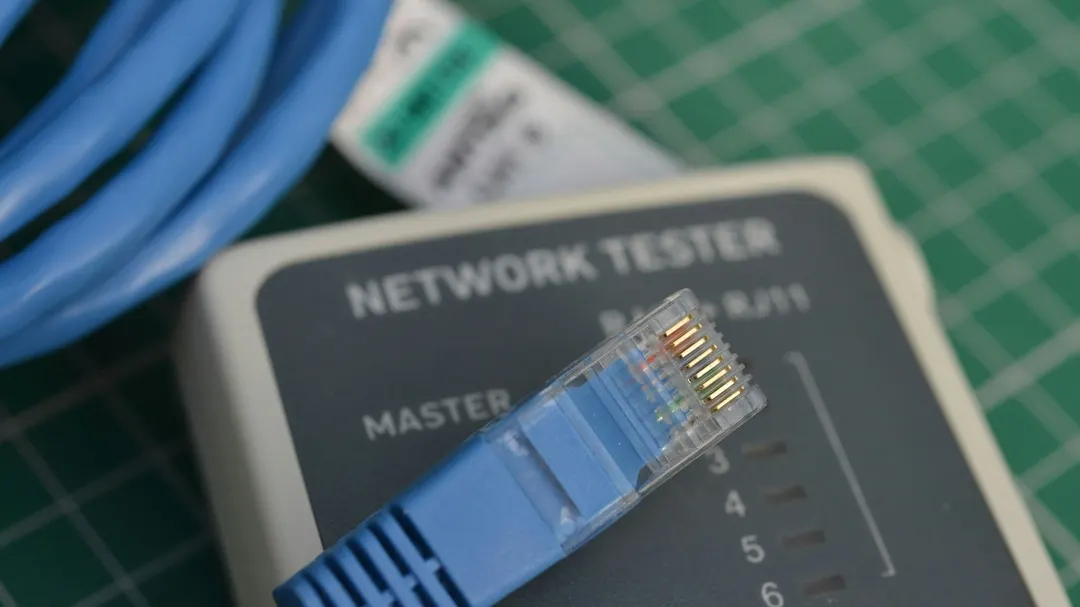
Fluke is a test equipment brand, not a certification body. A PASS in a field test report means the tested link passed under the limits and configuration selected for that measurement; it does not mean the manufacturer’s products or an entire product series have been certified. A permanent link or channel test measures an installed link with a defined boundary, while a laboratory component test measures a cable sample. Neither substitutes for the other, and neither establishes the performance of an unopened reel. A wire-map check confirms connectivity, not Cat6 performance, and a PASS screenshot without margins, configuration or a limit set cannot settle a specification dispute.
Material compliance answers a narrower question. RoHS addresses restrictions on specified hazardous substances in applicable products; it is not a transmission standard. A RoHS document cannot establish that a cable reaches Cat6 performance, that its conductor is bare copper or copper-clad aluminium, that it has passed a field test, or that it meets every regulatory requirement of the destination market. The type of document matters too: a manufacturer’s declaration of conformity, a material declaration and a third-party laboratory report have different evidential sources and different scopes. Check that the file corresponds to the product, material, model or range actually being purchased, rather than noting only that a RoHS document exists.
ISO 9001 sits in a different category again. It is a quality management system standard, and certification normally indicates that an organisation within the certified scope has established and operates a system meeting its requirements. That says nothing direct about whether a specific Cat6 cable has passed a full transmission test, what its conductor is made of, or whether it satisfies RoHS, CE or CPR requirements. It is a reasonable input when assessing how a manufacturer controls its processes; it is not a substitute for product-level specifications, test reports and compliance documents. No certification guarantees that every batch will be free of defects.
The fourth row — safety and market compliance — causes the most confusion, because the documents in it are often described with the same vocabulary while resting on different legal and procedural foundations. CE marking, RoHS, UL certification and CPR are taken up separately below.
Why CE, RoHS, UL and CPR Are Not Interchangeable
| Item | What it relates to | What it does not prove by itself |
|---|---|---|
| CE marking | A manufacturer’s declaration of conformity with applicable EU harmonisation legislation | Cat5e or Cat6 transmission performance |
| RoHS | Restrictions on specified hazardous substances in applicable products | Cable category performance or PoE capability |
| UL certification | Product safety evaluation within a defined certification scope | Automatic compliance with every US requirement, or Ethernet category performance |
| CPR | Construction product requirements, including reaction-to-fire classification where applicable | General Cat5e or Cat6 transmission performance |
CE marking is a declaration by the manufacturer that the product conforms to the EU harmonisation legislation applicable to it. It is not a network cable performance certification, and it should not be described as a single uniform third-party certificate. Which legislation applies depends on the product and its intended use, so the first question is which requirements are in scope at all; only then does it make sense to ask what conformity assessment and documentation those requirements call for. A CE mark on a datasheet says nothing about whether the cable has been tested to Cat6 limits.
RoHS and CE are related in some product assessments but remain different concepts. Where RoHS applies to a product, it may form part of the applicable EU conformity assessment; a RoHS document is still not a CE Declaration of Conformity. The same caution applies to the other direction: a DoC does not by itself demonstrate material-level compliance for every compound in the cable.
CPR concerns construction products placed on the EU market. Whether a cable falls within its scope has to be judged against the product type, its intended use and the relevant harmonised standards. For fixed-installation building cables that are in scope, the reaction-to-fire classification, the Declaration of Performance and the associated CE marking are the documents to examine. CPR is not a Cat5e or Cat6 transmission certification. It would be equally wrong to assert that every network cable, for every use, requires a DoP, or that a low-voltage data cable is automatically outside CPR altogether. Both claims skip the product-and-use assessment that decides the question.
UL is one of the product safety testing and certification systems encountered in the US market. A listing or certification has to be read with the specific product category, the applicable standard and the certification scope in front of you. A UL mark does not mean the product automatically satisfies every US requirement, does not replace category performance verification, and is not an alternative to CE documentation. For any given market, the product’s use, installation environment, local rules, project specification and applicable certification requirements determine what is needed.
Two documents are regularly confused in this context. A Declaration of Conformity is a declaration, made by the manufacturer or the party responsible under the relevant legislation, that a product meets applicable requirements. A Declaration of Performance belongs to the CPR framework for construction products and states performance against declared characteristics. They are produced under different requirements and answer different questions; using the terms as synonyms will produce a specification that nobody can check.
One qualifier belongs with the table above. “Does not prove by itself” means that a single document is insufficient evidence for the claim in the right-hand column. It does not mean these systems are unrelated — RoHS may sit inside a CE assessment, and a CPR DoP and CE marking may appear on the same product. The point is that none of them can be swapped for a transmission test report, and none can be inferred from another.
Checking Documents Before an Order
Document review is a sequence of five checks, and the order matters: a report that is valid in the abstract is still useless until it has been tied to the product on the order.
- Product identity. Is the model and specification named, and does it identify the Cat5e, Cat6 or Cat6A product being quoted? Does the file cover the same product family and construction, or a neighbouring one that happens to share a category label?
- Test or certification scope. What was examined — a single conductor, a finished cable sample, an installed link, or a manufacturer’s management system? Which test configuration and standard were used, and does the scope include the construction, gauge and conductor material actually being purchased?
- Standards and test conditions. Are the standard name, its version, the limit set and the test configuration stated? A complete report records measured results and margins; a PASS screenshot records very little. A report that names one category while applying another category’s limits is not evidence for either.
- Issuing organisation. Was the document produced by the manufacturer, a third-party laboratory, a certification body, or generated by test equipment? Can the report number, certification scope or issuing body be checked? This is not a demand that every valid document be third-party issued: manufacturer declarations and independent laboratory reports both have their place in different compliance contexts, provided the type and scope are understood.
- Validity and applicability. Is the certificate current, and does its scope cover this product? A change to the construction, materials or production site can leave an old report describing something other than what will be shipped. Where the order or batch warrants it, ask for current test or inspection records rather than relying on a file from an earlier production run.
| Purchasing requirement | Documents to request |
|---|---|
| Verify Cat5e or Cat6 performance | Applicable product performance test reports and relevant specifications |
| Verify material restrictions | Applicable RoHS documentation and supporting material or laboratory reports |
| Verify EU regulatory compliance | Applicable DoC, DoP and supporting documents, depending on product and intended use |
| Verify US product safety requirements | Applicable UL certification or listing information, where required |
| Evaluate manufacturer quality management | ISO 9001 certificate and its scope |
| Verify installed cabling performance | An appropriate field test report for the installed link |
No fixed document pack suits every order. What is needed follows the cable category and construction, the intended application, the destination market, the regulations that apply there, the project specification and whatever the customer or contractor has written into the contract. Asking every supplier for an identical bundle tends to produce identical-looking files rather than relevant ones. A supplier’s willingness to explain which document covers which requirement is often more informative than the number of certificates in the attachment.
A document pack is only useful when each item can be tied back to the product being bought. Buyers who check scope, product identity, standard version and validity before committing are in a better position to compare suppliers, and far less likely to discover at handover that the file they were given answers a different question from the one they asked.